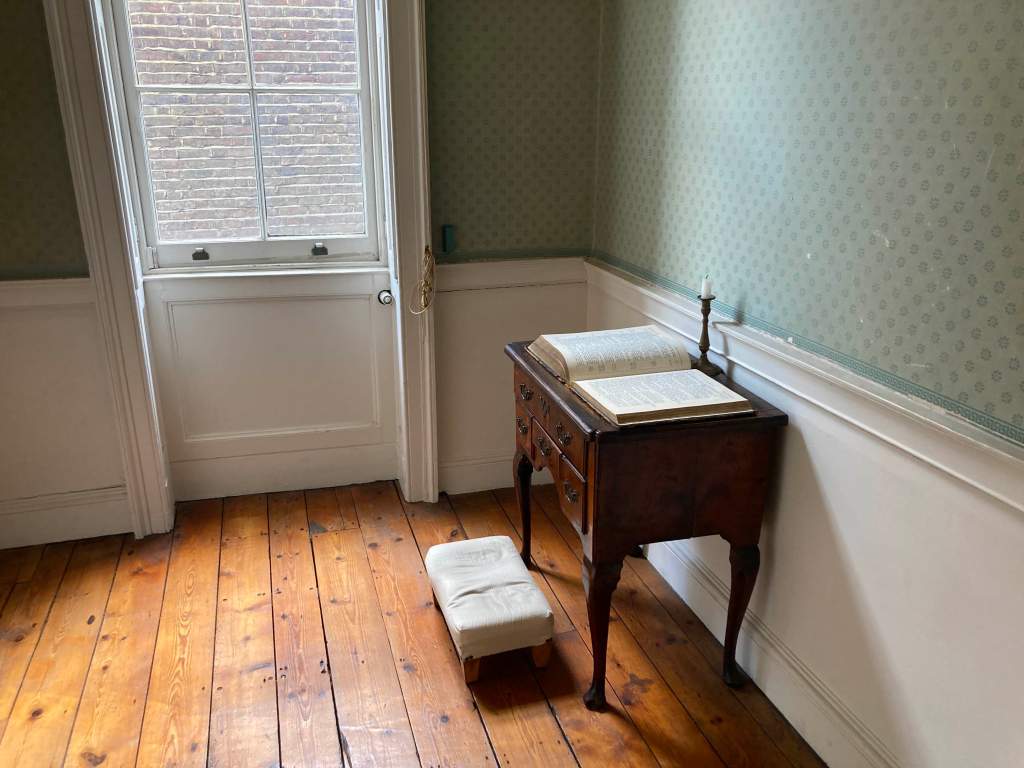
This summer, our Senior Pastor went with a group of young United Methodist clergy to England for a Wesley Heritage Tour. Our October sermon series was based on this trip, and we thought you might want to see some photos relevant to the topics covered in those sermons:
Week 1: Epworth & the Roots of Methodism
The Epworth Market Cross
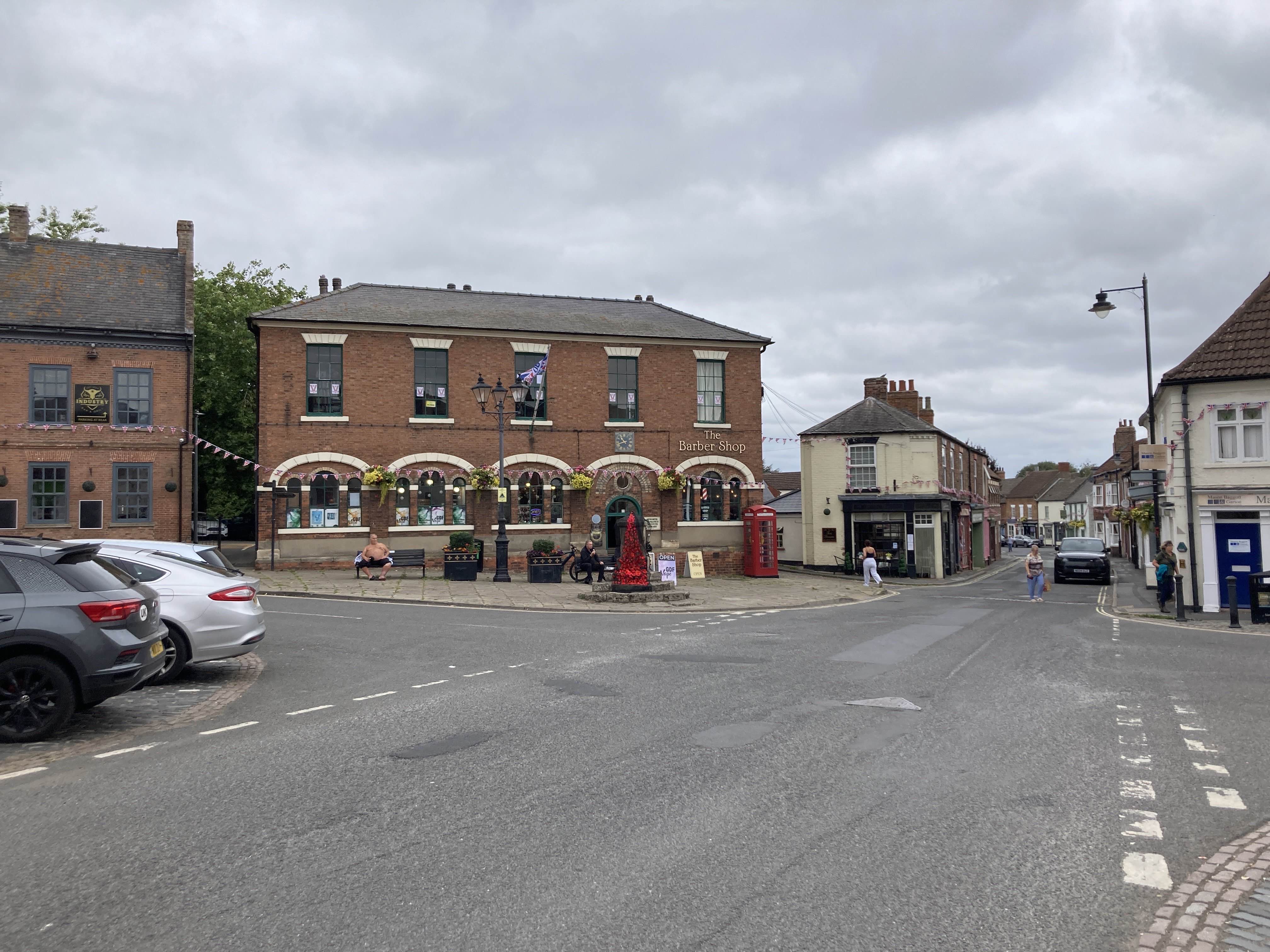
Many English towns organised the market in the shape of a cross, as a reminder to conduct one’s business with Christian ethics.
Many included a stone marker, with a small raised platform, on one corner. John Wesley preached from the one here in Epworth on numerous occasions.
You can see the marker in the center of the photo, covered in crocheted red poppies in honour of VJ Day. Poppies are associated with veterans in the UK because of the poppies that grew on Flanders Fields after WWI.
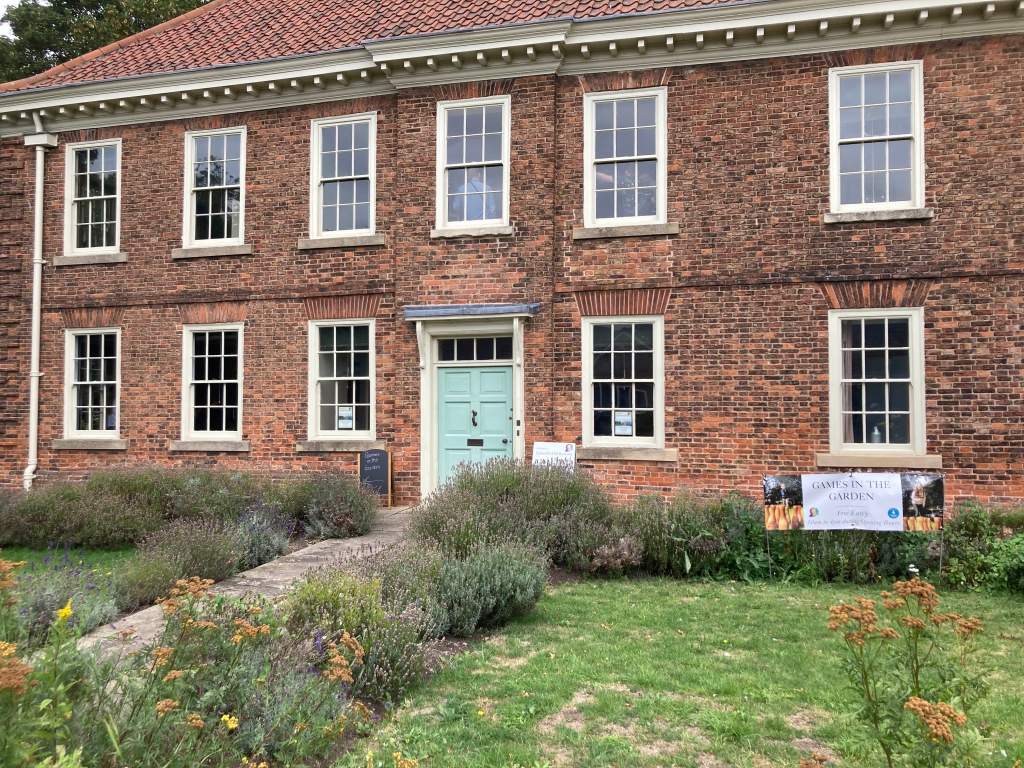
The Old Rectory
The rector, or head priest, of the Epworth parish church lived at this rectory. During the early part of John’s life, that rector was his father, Samuel Wesley.
When John was only 5 years old, the previous building’s thatched roof caught fire and burned almost entirely to the ground. John barely survived when a bystander saw him in the upstairs window and rescued him.
Samuel was convinced it was a parishioner who’d lit the fire. The parish would have paid for a modest new home, but Samuel went into debt to rebuild it in brick.
The Grave of Samuel Wesley
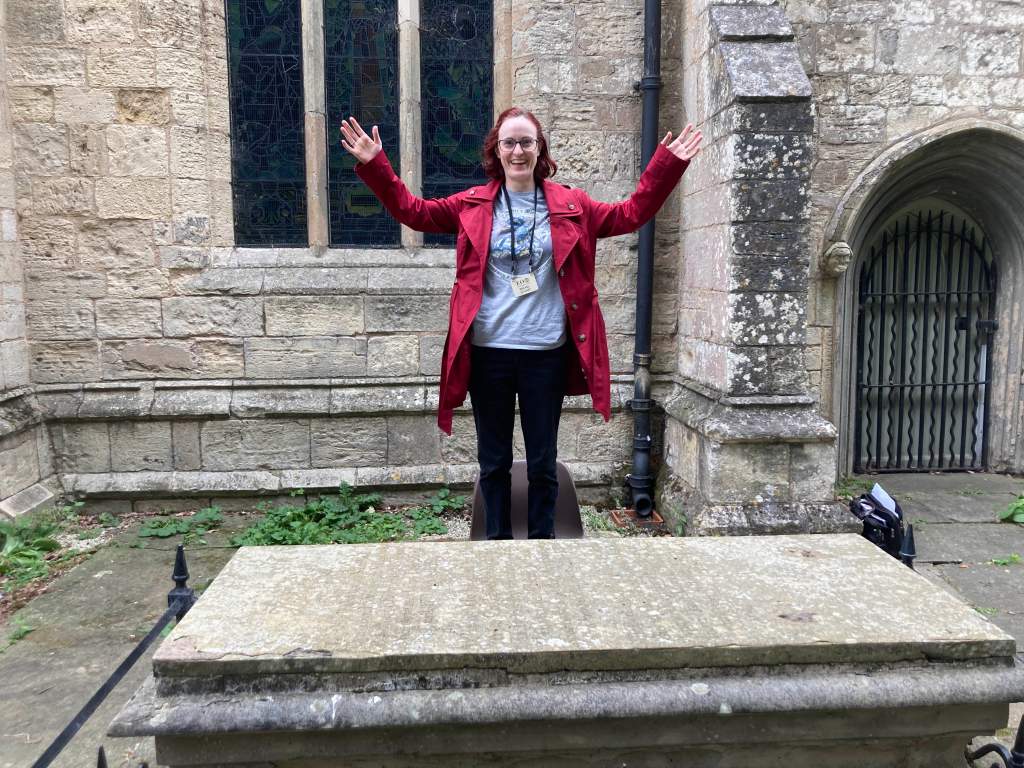
John’s father was buried right outside the church he served for forty years.
When Samuel’s successor refused to allow John to preach inside the church because he was both too popular and too “enthusiastic”—i.e., too emotional—John stood on top of his father’s grave that evening and preached from there.
Visitors can no longer stand on top of the grave, but they do provide a chair for photos.
Week 2: Oxford & the Holy Club
The University Church at Oxford
The University Church of St. Mary the Virgin serves the entire community of Oxford University, all its colleges, and the surrounding city.
During his ministry, John Wesley preached three challenging sermons to the students and professors of his time. In one, he charged the congregation to be “altogether Christians,” rather than “Almost Christians.”
After the third sermon criticised the spiritual apathy of the university community, he was never asked to preach there again.

Christ Church Cathedral
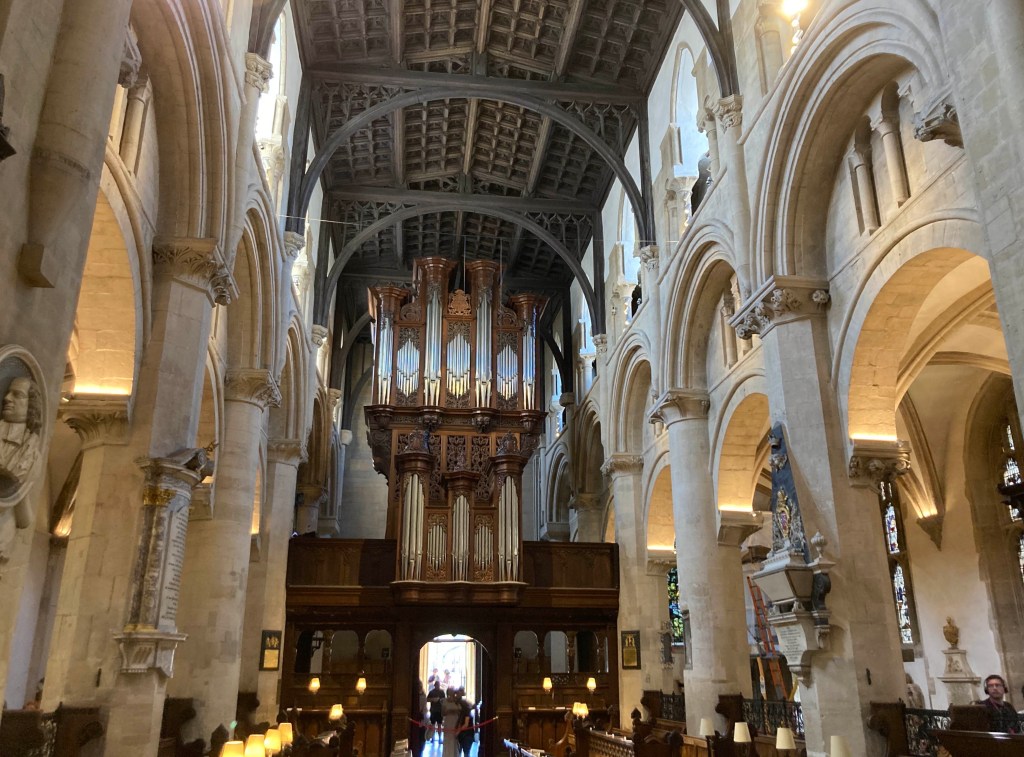
John and Charles Wesley were both students at Christ Church, one of the many colleges that make up Oxford University.
The college church is the city’s cathedral (the seat of the bishop) and has been associated with high-church Anglicanism since before the Wesleys’ time.
Both Wesleys were ordained as priests of the Church of England in this cathedral, in 1728 (John) and 1735 (Charles).
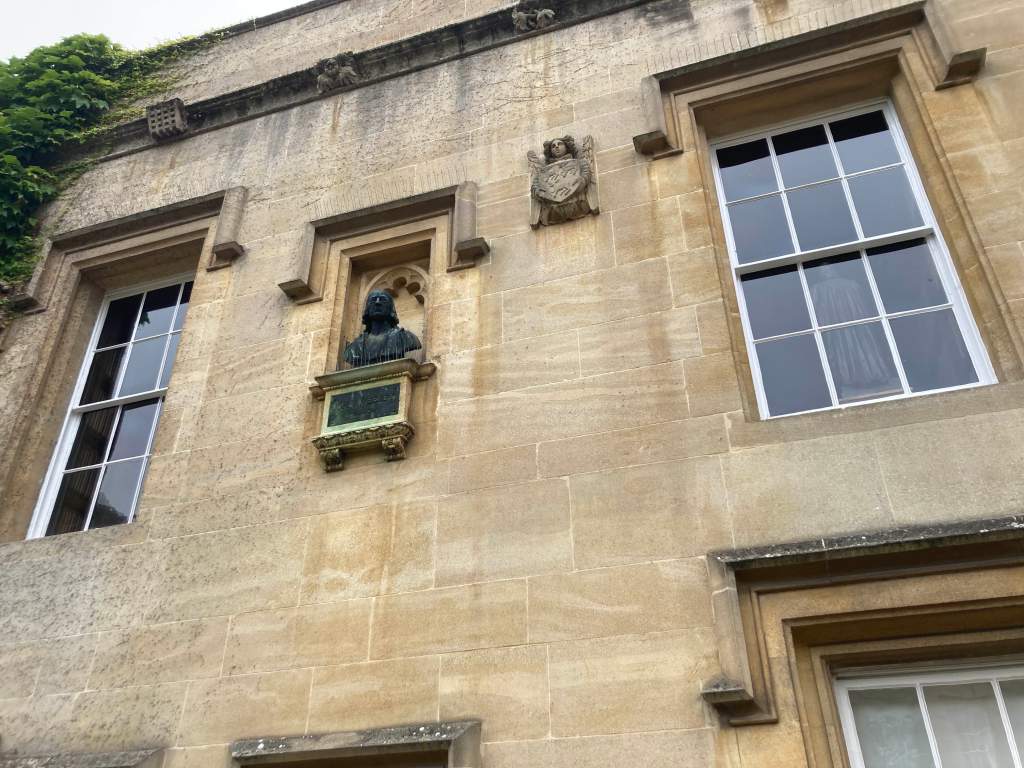
Lincoln College, Oxford
After completing his studies, John was elected a fellow of Lincoln College. As a fellow, he was responsible for research and teaching, and he lived on the grounds.
One of the offices in the College has been set up to mimic what Wesley’s study might have looked like during his time there. A bust on the outside wall marks the space.
It was in his Oxford study that John convened the meetings of the “Holy Club” his brother had started not long before.
Week 3: Field Preaching in Bristol
Hanham Mount

Originally just a simple hill, this grassy spot in Bristol was the birth of Methodist field preaching.
George Whitfield, an early Calvinist Methodist, invited John to join him in preaching to the coal workers in the area who did not have easy access to church life. At first, John “could not reconcile [him]self to this strange way of preaching,” but it soon became an integral part of the Methodist movement.
Set on the current stone pulpit is the simplified version of John’s words, “I look upon all the world as my parish.”
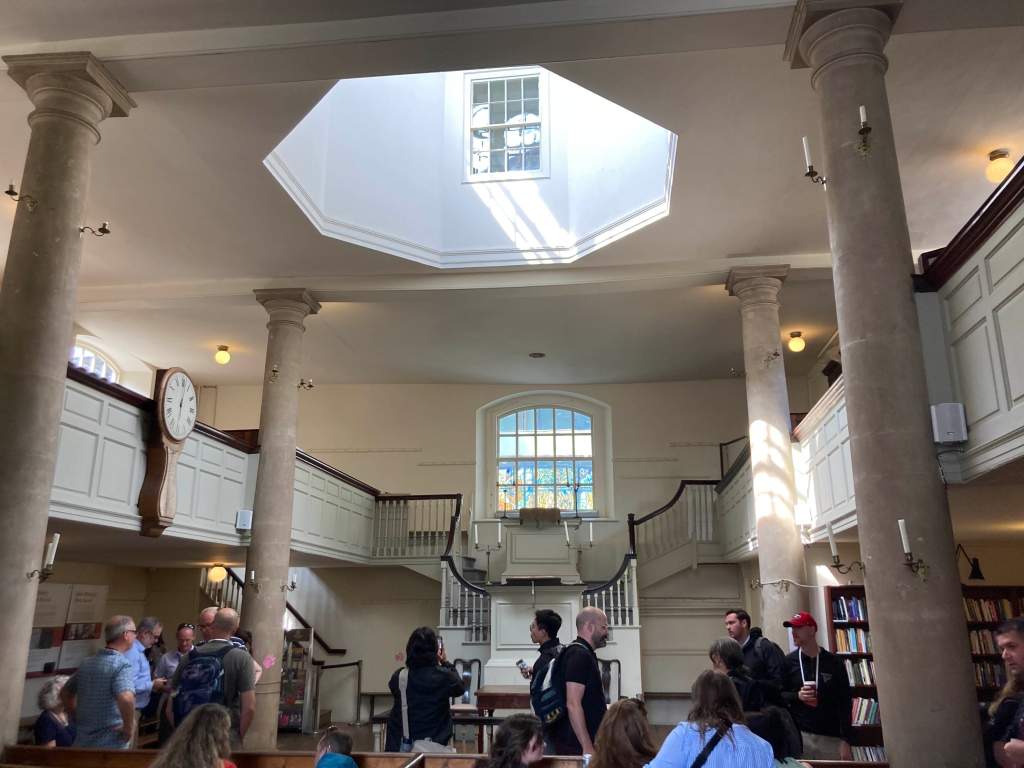
The New Room
As the Methodist movement grew, the need for a home base of sorts grew as well. This “New Room” in Bristol was that home base.
Though not a church, this meeting house saw many Methodist gatherings, and preachers stayed in the bedrooms upstairs while working from the Bristol circuit. From the windows in the dining room, John could look down and listen to preachers in training.
Preachers staying here were expected to gather daily for regular worship and communal meals, in order to build deep relationships with one another and keep them spiritually grounded.
Charles Wesley’s Home
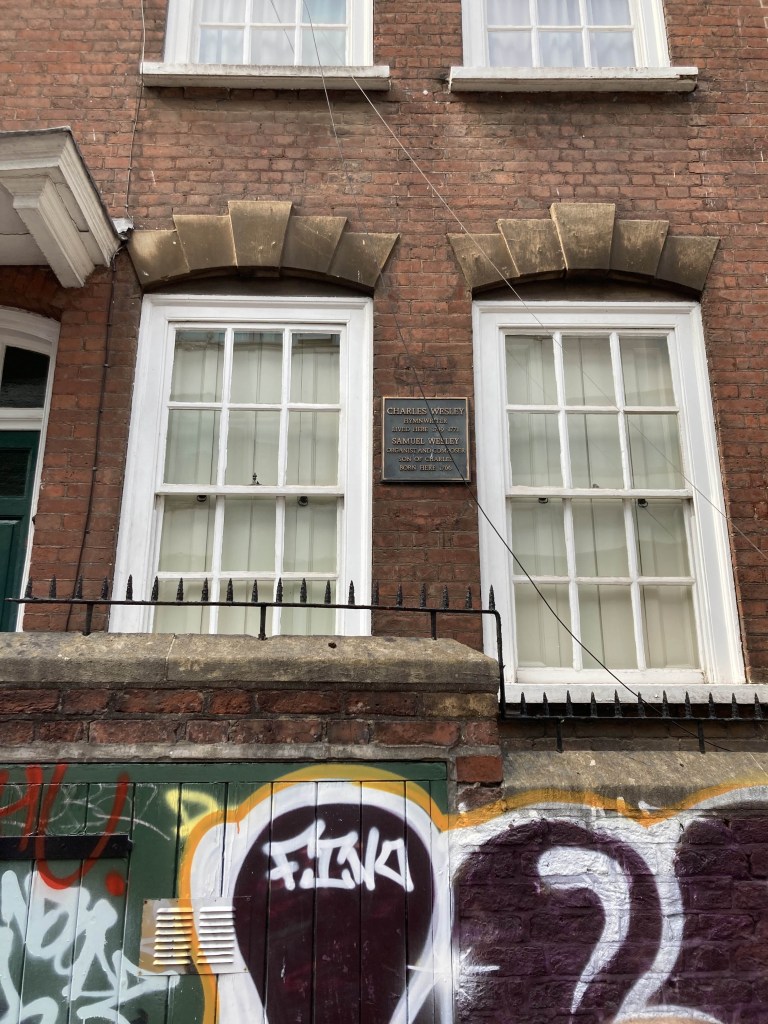
From 1749 to 1771, Charles Wesley lived in this Bristol townhouse.
The home is kept up today as a museum containing artefacts related to Charles and his family, such as the harpsichord in the family music room, or his desk in the attic.
His son, Samuel Wesley, named for John and Charles’ father, was born here. The younger Samuel became a prolific composer and organist, and was at times called “the English Mozart.” His own son Samuel Sebastian Wesley became a composer as well, and some of his tunes are in our hymnal to this day.
Week 4: London & Aldersgate Street
Aldersgate Street
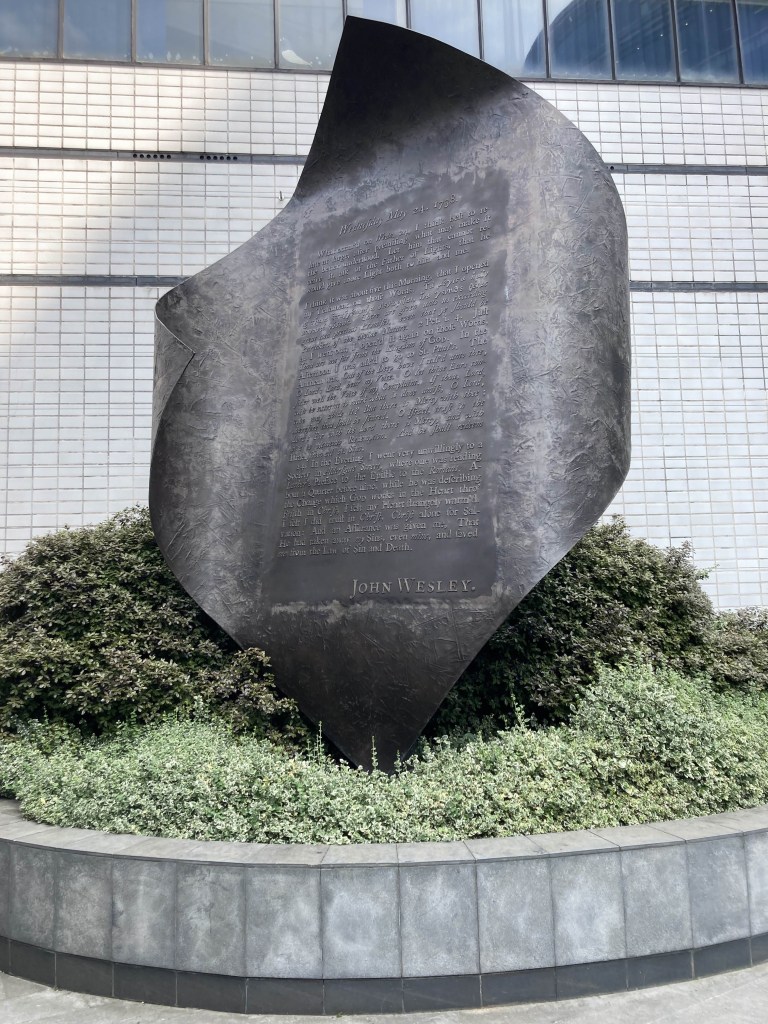
Outside the London Museum stands a flame-shaped monument marking the moment that John Wesley experienced his “heart strangely warmed.”
It’s uncertain exactly where the house on Aldersgate Street was, but on May 24, 1738, just three days after his brother had his own similar experience, John went to a prayer meeting.
As they read from Luther’s Preface to Romans, John suddenly felt God’s grace more personally and concretely than he ever had. He later said it almost felt like he hadn’t been Christian at all until then.
City Road Chapel
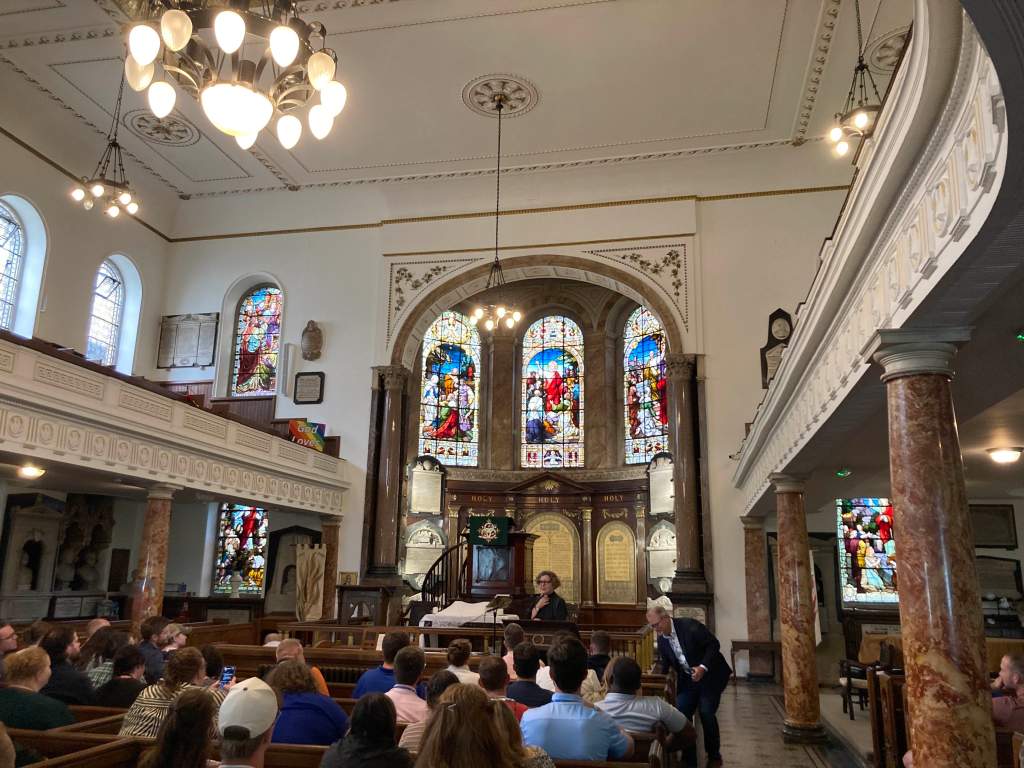
The first actual Methodist house of worship was built on the site of an old cannon foundry in London.
It still serves as an active Methodist Church. Wesley’s Chapel is currently led by its first female Superintendent Minister, the Revd Dr Jennifer Smith, though women have preached there since 1926.
Beneath the church is a museum of artefacts from Methodist history all over the world. John Wesley is buried in the small garden behind the chapel, and his mother Susanna is buried in the cemetery across the street.
John Wesley’s Home
For the last several years of his life, John Wesley lived in the home within the courtyard of the City Road Chapel.
The window of his prayer closet overlooked the chapel building, and one can imagine him praying for the many Methodists who saw this as their home.
John continued to preach regularly until the last year of his life. After that his health began to fail—and yet he was out preaching just days before his death. On his deathbed, his friends were with him singing. His last words were, “The best of all is, God is with us.”